Redefining Mastery: Why Even Experienced Therapists Need This CourseA Professional Review of the Deep Tissue Massage Course at RSM International Academy
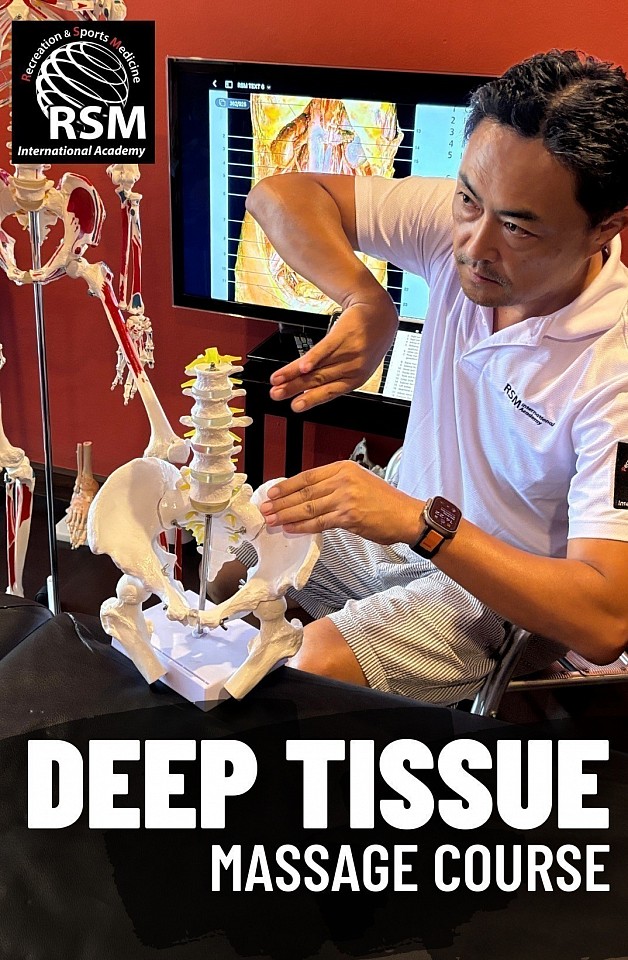
As a licensed therapist with years of clinical practice under my belt, I am generally skeptical of continuing education courses. Too often, they are simply refresher workshops disguised as advanced training. I walked into the Deep Tissue Massage Course at RSM International Academy expecting a review of techniques I already knew.
I was humbled to discover how much I still had to learn.
Having completed their Trigger Point Therapy module previously, I knew the standard was high. However, this course challenged my established patterns and forced me to deconstruct my entire approach to structural bodywork. It wasn't about learning new moves; it was about refining the clinical reasoning behind every single touch.
From Intuition to Precision
Veterans often rely heavily on intuition. We "feel" where the problem is. RSM respects that, but demands scientific validation. We analyzed hundreds of anatomical images and posture profiles, taking what is often dismissed as mere anatomy basics for massage students and elevating it to a diagnostic science.
The course emphasized that true depth isn't about force; it's about accuracy. We spent days refining our skills in addressing specific muscle groups—not just the broad superficial layers, but the distinct fascial septa and deep stabilizers like the multifidus and hip rotators. This anatomical precision allowed me to distinguish between a hypertonic muscle and a fascial adhesion, a nuance that completely changes the treatment outcome.
Sustainability and Pressure
Longevity is the biggest challenge for seasoned therapists. We all know the toll deep tissue work takes on our joints. This training was a masterclass in developing effective pressure techniques that prioritize biomechanical advantage over brute strength.
Learning to sink gradually and utilize body weight properly has reduced the strain on my hands significantly. It was a stark reminder that one of the most essential tools for massage therapists is our own body mechanics. The technique taught here doesn't just feel deeper to the client; it feels lighter to the therapist.
Advanced Clinical Reasoning
The curriculum went far beyond relaxation, focusing heavily on common injuries treated by deep tissue massage. We dissected complex cases—from piriformis syndrome to cervical impingement—viewing them through the lens of the kinetic chain.
This analytical approach clarified the differences between massage modalities. Instead of defaulting to a standard routine, I now have a clear clinical flowchart for when to apply deep tissue mechanics versus other interventions. It shifted my perspective from "managing symptoms" to "correcting architecture."
Elevating the Client Relationship
Experience teaches us that trust is key. However, this course added a new layer to establishing rapport with clients. It wasn't about bedside manner; it was about the ability to articulate the physiological "why." Being able to explain the link between a client's pelvic tilt and their shoulder pain with clinical accuracy has deepened the trust my clients place in me. They appreciate the transparency and the educational aspect of the session.
A Note on Instruction
The quality of instruction under Hironori Ikeda, MSc Sports Medicine, is what sets this academy apart. His background in university-level sports medicine provides a rigor that is often missing in massage education. When you are learning alongside physiotherapists and national team coaches, the level of discourse is simply higher.
For any licensed professional thinking they have "mastered" deep tissue, I urge you to reconsider. This advanced clinical training
offers the rare opportunity to refine your craft, protect your body, and truly understand the science of structural alignment.